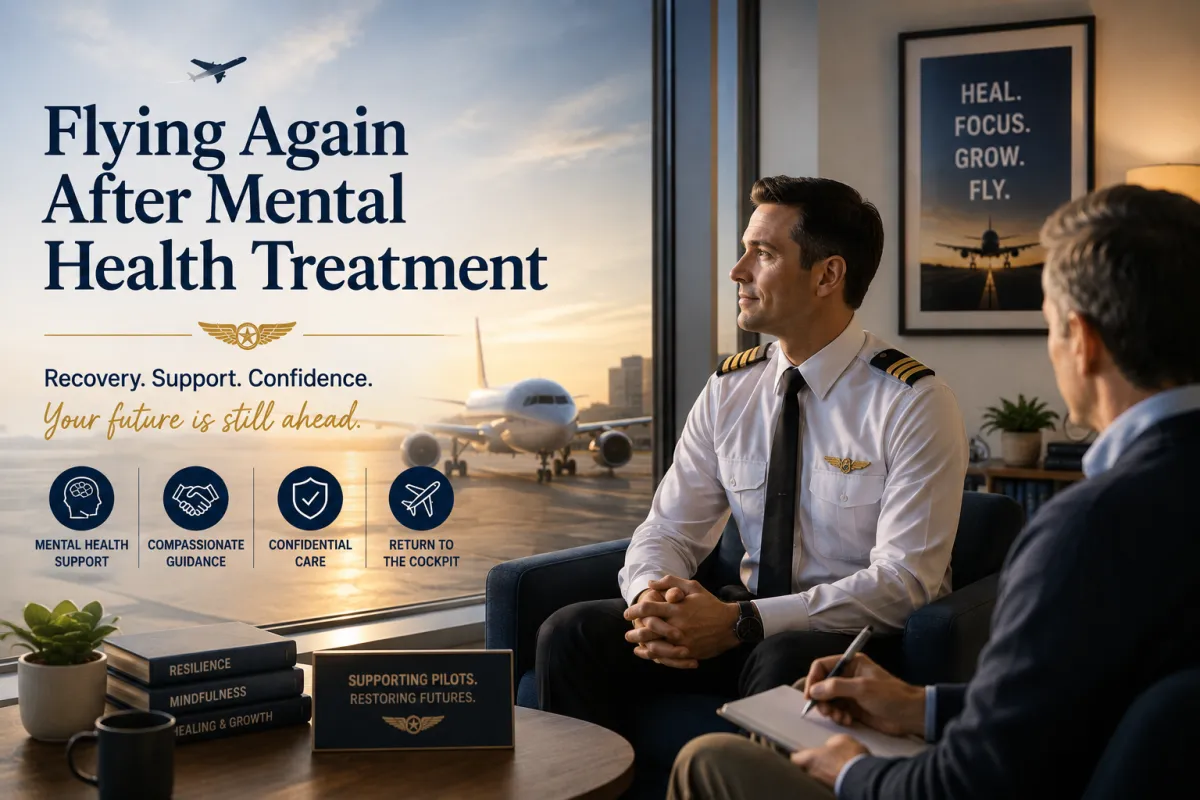
Flying Again After Mental Health Treatment
Flying Again After Mental Health Treatment
Some pilots returning to flight after mental health treatment may need to pursue FAA Special Issuance medical certification, while others may qualify through standard FAA certification pathways depending on their individual circumstances. The FAA has updated its guidance to reflect that mental health diagnoses do not automatically disqualify pilots. Working with a qualified clinician, such as Stephen Rought, LCSW, helps pilots navigate this process with career-safe, confidential support.
Key Takeaways
The FAA requires pilots to disclose mental health treatment history on their medical certification applications.
Pilots who complete mental health treatment often qualify for Special Issuance medical certificates under FAA rules.
The FAA's 2024 reforms expanded accepted treatments, allowing more pilots to maintain active medical certification.
Stephen Rought, LCSW in Chino Hills, CA supports pilots navigating FAA mental health disclosure requirements.
What Must Pilots Know Before Seeking Treatment?
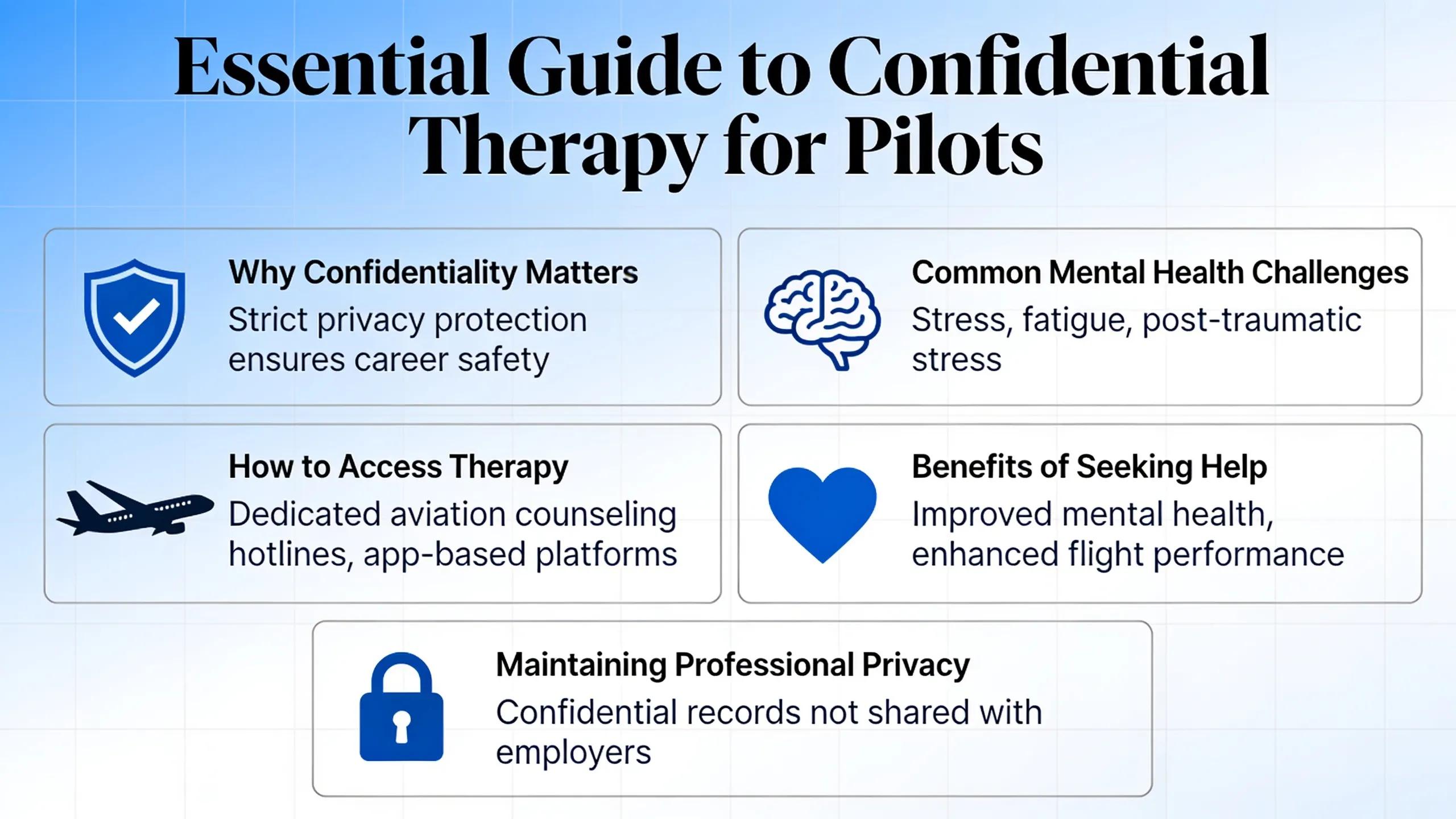
Pilots must understand that the FAA does not stigmatize mental health conditions or punish aviators who seek professional help. The FAA has updated portions of its medical certification guidance in recent years to expand pathways for certain mental health conditions and treatments, expanding the list of conditions that an Aviation Medical Examiner can address without deferral or prior FAA review.
Does Seeking Mental Health Treatment Jeopardize a Pilot's Medical Certificate?
Many pilots carry an outdated fear that any mental health diagnosis ends a flying career. That fear is no longer grounded in current FAA policy. The FAA has broadened the scope of conditions that Aviation Medical Examiners handle directly, reducing the bureaucratic burden on pilots who pursue treatment. Seeking care proactively is not a career-ending decision.
How Can Pilots Protect Their Privacy While Getting Help?
Privacy concerns and high-stakes performance demands are real factors that shape how aviation professionals approach mental health care. Pilots benefit from working with providers who offer discreet, career-safe guidance designed specifically for the aviation community. Stephen Rought, LCSW provides specialized support structured around these concerns, available to pilots in California and Florida.
Before beginning treatment, pilots should take the following steps:
Confirm the provider's familiarity with aviation-specific mental health considerations.
Ask about [diagnosis-free support options](https://stephenrought.com/services) that address stress and burnout without generating a formal diagnostic record.
Review current FAA guidance on which conditions Aviation Medical Examiners handle independently.
Schedule a [confidential consultation](https://stephenrought.com/getting-started) to clarify goals and assess fit before committing to a treatment plan.
How Do Pilots Navigate the FAA Return-to-Flight Process?
Navigating the FAA return-to-flight process requires pilots to work through a structured medical certification pathway that has grown more accessible in recent years. The FAA has updated the Guide for Aviation Medical Examiners to permit treatment with certain conditionally acceptable antidepressants including Cymbalta, Effexor, and Pristiq, marking a meaningful shift in how aviation medicine addresses mental health.
Depending on a pilot's diagnosis, treatment history, and medical certification needs, the FAA may require participation in the HIMS (Human Intervention Motivation Study) Program as part of the certification process. HIMS provides a structured pathway for evaluating, monitoring, and supporting pilots with certain medical conditions while helping qualified individuals safely return to flight.
What Steps Does a Pilot Take to Regain Medical Certification?
Seek qualified clinical support. Pilots should engage a licensed mental health professional experienced with aviation-specific concerns before initiating any formal FAA process.
Document treatment progress. Thorough, consistent records of diagnosis, treatment, and stability strengthen any certification application.
Apply for a Special Issuance medical certificate. Submit documentation through an Aviation Medical Examiner for FAA review.
Allow time for processing. Review timelines vary depending on the complexity of the case, the documentation submitted, and the FAA's current workload.
Can Pilots Get Mental Health Support Without Triggering a Formal Diagnosis?

Pilots concerned about career impact have access to diagnosis-free support options designed to protect confidentiality while addressing stress, burnout, and performance pressures. These options allow pilots to build coping skills and strengthen resilience before—or, when appropriate, entirely separate from—any formal FAA medical certification process.
Online therapy provides an accessible, flexible, and confidential pathway that accommodates demanding flight schedules without compromising privacy. Pilots in California and Florida can access this support through Stephen Rought, LCSW, via a HIPAA-compliant telehealth platform.
How Can Pilots Sustain Mental Wellness After Returning to Flight?
Sustaining mental wellness after returning to flight requires a structured, ongoing commitment to evidence-based support — not a one-time check-in. Randomized controlled trials and systematic reviews confirm that telehealth interventions reduce stress symptoms and improve overall well-being among high-risk occupational groups, including pilots.
Pilots face a distinct combination of stressors that general wellness advice rarely addresses. Irregular schedules, frequent time zone changes, and the responsibility of transporting passengers create cumulative pressure.
What Steps Help Pilots Maintain Mental Health Long-Term?
Schedule regular telehealth sessions — consistent appointments prevent stress from accumulating between flights.
Identify occupation-specific triggers — work with a clinician to map how schedule disruption and fatigue affect mood and performance.
Use confidential, career-safe counseling — seek providers who offer counseling that focuses on stress management, burnout, resilience, and performance concerns when a formal psychiatric diagnosis is not clinically appropriate.
Review progress regularly — adjust the treatment plan as flight demands and life circumstances evolve.
Where Can Pilots Access Confidential Support?
Stephen Rought, LCSW offers confidential counseling for pilots and aviation professionals across California and Florida. In-person sessions are available in Chino Hills, and secure telehealth extends care statewide. Accommodating demanding, unpredictable schedules without compromising privacy.
Returning to flight after mental health treatment is a journey that demands both courage and careful preparation. Pilots who navigate it successfully do. By treating their psychological well-being with the same disciplined attention they give to technical proficiency. Understanding the FAA's evaluation process, working with qualified professionals. With the right guidance, mental wellness and a safe return to the cockpit remain fully compatible goals.
Why Pilots Work with Stephen Rought, LCSW
Stephen Rought, LCSW works with pilots and aviation professionals who must balance personal well-being with FAA medical certification requirements. His counseling approach emphasizes confidentiality, evidence-based care, and an understanding of the unique occupational demands facing professional aviators. He collaborates with clients to support emotional health while helping them understand how treatment decisions may intersect with FAA medical certification.
FAQ
Can pilots see a therapist without reporting it to the FAA?
Yes, many pilots can see a therapist without automatically jeopardizing their FAA medical certificate. Whether counseling or therapy must be reported depends on the nature of the treatment, any diagnosed mental health condition, prescribed medications, and the information requested on the FAA medical application. Speaking with a mental health professional for stress, burnout, relationship concerns, or life transitions does not automatically disqualify a pilot from flying. Because every situation is unique, pilots should work with providers who understand FAA medical certification requirements and answer all FAA medical application questions truthfully.
Does the FAA allow antidepressants?
Yes. The FAA permits the use of certain antidepressant medications under specific medical certification guidelines. In recent years, the FAA expanded its list of conditionally acceptable medications to include additional antidepressants for qualifying applicants. Approval depends on factors such as the pilot's diagnosis, medication stability, side effects, treatment response, and supporting medical documentation. Pilots taking antidepressants should consult both their treating clinician and an Aviation Medical Examiner before making decisions that could affect medical certification.
What is a Special Issuance medical certificate?
A Special Issuance medical certificate is an FAA authorization that allows a pilot with certain medical conditions to hold a valid medical certificate after demonstrating that the condition is stable and compatible with safe flight operations. The FAA reviews medical records, treatment history, specialist evaluations, and other supporting documentation before determining eligibility. Not every pilot who receives mental health treatment requires Special Issuance, but it may be necessary depending on the diagnosis, treatment history, medication use, and individual circumstances.
How long does FAA mental health review take?
FAA mental health review timelines vary depending on the complexity of the case, the completeness of the submitted documentation, and the FAA's current workload. Applications with comprehensive medical records and clear evidence of treatment stability often move more efficiently than cases requiring additional evaluations or information. Pilots can help avoid unnecessary delays by working with experienced healthcare providers, maintaining thorough treatment documentation, and submitting complete records through their Aviation Medical Examiner.
Does seeking mental health treatment automatically disqualify a pilot from flying?
Mental health diagnosis do not automatically disqualify pilots under current FAA policy. Seeking care proactively is not a career-ending decision.
How do pilots return to flight after completing mental health treatment?
Pilots pursue FAA medical certification through the Special Issuance process. Requires documented treatment records, evaluations, and a demonstrated period of stability before authorization is granted.
Where does Stephen Rought, LCSW provide support for pilots navigating FAA mental health requirements?
Stephen Rought, LCSW, is based in Chino Hills, CA, and provides career-safe, confidential support to pilots in California and Florida.
If you're a pilot considering therapy, recovering after treatment, or preparing for FAA medical certification, confidential guidance can help you understand your options before taking the next step. Stephen Rought, LCSW provides counseling for pilots in California and Florida through secure telehealth and in-person appointments in Chino Hills.
