
FAA Monitoring Stress: Managing Emotional Stress During FAA
FAA Monitoring Stress: Managing Emotional Stress During FAA
By Stephen Rought, LCSW Editorial Team · Updated 2026-08-03
HIMS pilots manage emotional stress through structured routines, peer support groups, and consistent therapy sessions. Stephen Rought, LCSW, based in Chino Hills, CA, provides specialized counseling to address anxiety, career pressure, and compliance demands throughout the monitoring period, helping pilots maintain psychological stability while meeting FAA requirements for a safe, sustainable return-to-flight.
Pilots must process the pressure of unannounced abstinence testing constructively. Working with a therapist such as Stephen Rought, LCSW in Chino Hills, CA, supports steady coping through this essential, chronic-disease-focused recovery element.
Managing emotional stress during FAA HIMS monitoring requires structured coping tools. Unannounced abstinence testing and strict reporting create ongoing pressure. Pilots benefit from evidence-based counseling, peer support groups, and consistent communication with their HIMS AME. Stephen Rought, LCSW, offers discreet, career-safe therapy addressing anxiety and burnout without jeopardizing certification or confidentiality throughout recovery.
Key Takeaways
HIMS monitoring routinely assesses pilot recovery quality while ensuring National Air Space safety and medical certification validity.
Aviation Medical Examiners evaluate pilots' physical and mental fitness to operate aircraft safely in commercial aviation.
Stephen Rought, LCSW in Chino Hills, CA provides specialized support for pilots navigating HIMS recovery programs.
Substance misuse programs in commercial aviation address unpredictable life challenges affecting pilot mental health and performance.
What Makes HIMS Monitoring So Stressful?
Constant scrutiny defines the daily experience of pilots under HIMS supervision. The FAA HIMS program is a federally approved monitoring. Treatment protocol that helps pilots recover from substance use or mental health concerns and return to flying under close supervision. That supervision, while designed for safe reintegration, creates a persistent undercurrent of pressure that most career fields never require their workers to carry.
Unannounced abstinence testing sits at the center of that pressure. Pilots never know exactly when a call will come. That unpredictability keeps FAA monitoring stress active even during periods of stability. The testing exists to protect the integrity of recovery, not to punish, but the uncertainty still weighs on daily routines.
Why does unpredictability make monitoring harder on pilots?
Uncertainty removes a sense of control, and control is something aviators rely on heavily in their profession. A pilot who has spent years mastering checklists and procedures suddenly faces a process with no fixed calendar. That mismatch between training instincts and monitoring reality intensifies day-to-day tension.
Aviation already ranks among the most mentally and physically demanding industries, long before monitoring requirements enter the picture. Pilots carry enormous responsibility for passenger safety, manage unpredictable schedules, and endure rigorous ongoing evaluation. Stress functions like a constant companion in these careers, shaping training, scheduling, and safety judgment even without HIMS involved.
Does HIMS monitoring add pressure to an already stressful career?
Layering supervised recovery onto an already demanding job compounds the load. Pilots juggling both realities benefit from pilot anxiety support that acknowledges the dual weight of career performance. Recovery accountability, rather than treating either concern in isolation.
How Does Unannounced Testing Affect Pilot Anxiety?
Unannounced testing raises FAA monitoring stress for many pilots, even those in stable recovery. Random calls, tight testing windows, and the fear of a false step create a low hum of dread that can surface at unpredictable moments. Yet this same testing structure exists for a protective reason: careful monitoring and periodic checks reassure both pilot and FAA that current treatment is holding steady against the disease's return.
That reassurance matters because chemical dependency behaves like a chronic illness, not a solved problem. Much like diabetes or heart disease, it carries a real risk of relapse. Ongoing testing feels heavier than a single evaluation precisely because the underlying condition never fully disappears.
Why does unmanaged stress threaten flight safety, not just personal well-being?
Stress does not stay contained to one person in a cockpit. Left unaddressed, it can erode coordination between crew members, cloud decision-making, and ultimately compromise flight safety itself. Every monitoring check carries higher stakes for this reason. A pilot's internal state ripples outward to the whole flight deck.
Can therapy actually reduce testing-related anxiety?
Yes. Structured pilot anxiety support helps pilots name what is happening internally before it spreads into other areas of life. Consider what unmanaged anxiety around testing tends to affect:
Sleep quality before scheduled or random tests
Communication with spouses, sponsors, or peer monitors
Confidence and focus during actual flight duties
Long-term job performance and career trajectory
Recognizing these patterns early, with a therapist familiar with HIMS demands, keeps testing anxiety from quietly undermining recovery, relationships, and work.
What Stress Reduction Techniques Actually Work for Pilots?
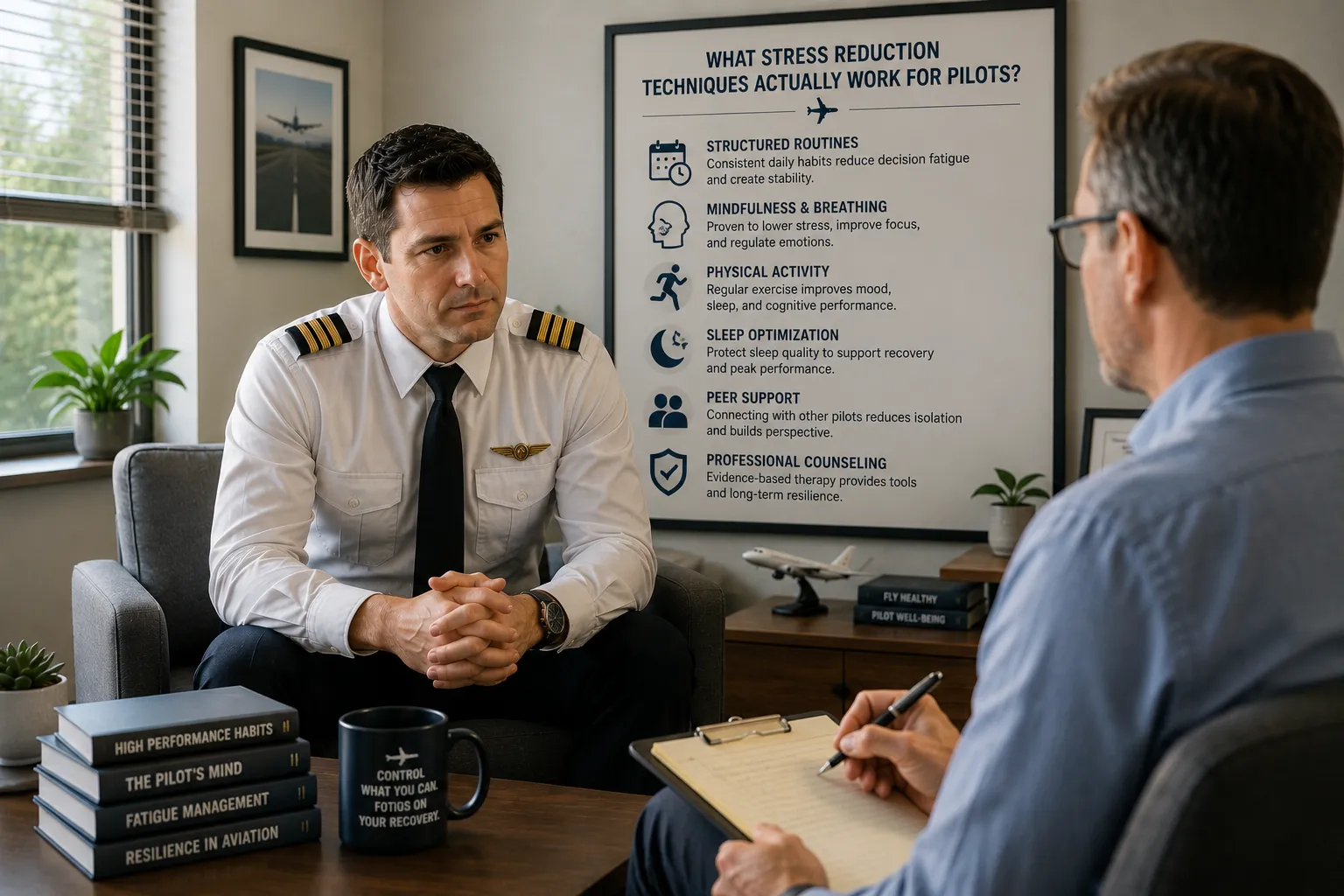
Practical, evidence-based methods work best because they fit inside program requirements rather than fighting against them. Pilots navigating FAA monitoring stress need tools that hold up under scrutiny, travel well across time zones, and don't require explaining to a chief pilot. Effective recovery isn't built on one silver-bullet habit. It spans several connected domains that reinforce each other over time.
What areas of life should pilots focus on to manage stress?
Real stress management touches mindfulness practice, physical fitness, nutrition, personal relationships, technology habits, and coping mechanisms. Neglecting one area often undermines progress in the others. A pilot who exercises daily but skips sleep still struggles with irritability and poor focus. A layered approach works better than chasing a single fix. Consider the areas that matter most:
Mindfulness and breathing practices — short, structured sessions that lower physiological arousal before and after flights
Physical fitness and nutrition — steady routines that counteract the toll of irregular schedules
Relationship maintenance — deliberate check-ins with family and peer sponsors during long trips
Technology boundaries — limiting late-night screen use to protect sleep quality
Coping mechanisms — journaling, peer support calls, or structured decompression after demanding duty periods
Why do irregular schedules make recovery harder for pilots?
Disrupted circadian rhythms rank among the toughest stressors pilots face during monitoring. Rotating report times and overnight layovers throw off sleep cycles, appetite, and mood regulation, all of which complicate an already demanding recovery timeline.
Personalized therapy fills the gaps that self-directed techniques can't reach alone. Working through workplace pressure, family strain, and the daily friction of scheduling irregularities with a therapist trained in aviation culture gives pilots a structured space to process what monitoring alone can't resolve. That combination, self-management plus professional support, forms the backbone of durable pilot anxiety support.
How Can Pilots Get Confidential Anxiety Support?
Confidential counseling exists for pilots in California and Florida, with in-person sessions in Chino Hills and secure telehealth available in both states. This structure lets aviators in different flying territories, layover cities, or reserve schedules access consistent care without disrupting their line checks or duty periods. Confidentiality and location flexibility, then, are the starting point — not an afterthought.
Pilot anxiety support at this level looks different from a generic therapy referral. Sessions target stress, burnout, emotional resilience, and personal growth head-on, rather than treating anxiety as a vague, undefined complaint. That specificity matters for aviators navigating HIMS monitoring, SSRI protocols, or return-to-duty pressure, where vague treatment plans create more uncertainty, not less.
Do pilots need to be in crisis before seeking help?
No. Waiting until performance slips or a relationship fractures isn't a requirement for getting support. Pilots functioning well, meeting obligations, and still passing checkrides can and should reach out early. Smaller stressors compound into something harder to manage.
Why does confidentiality matter so much for aviators?
Aviation Medical Examiners understand that pilots face the same human struggles as anyone else. Unpredictable life challenges affect mental health regardless of career stakes. Because certification and career security depend on discretion, confidential counseling gives pilots a private space to process anxiety without exposing sensitive details prematurely.
Working through these pressures with a therapist familiar with aviation culture offers several practical advantages:
Sessions scheduled around irregular flight rosters and reserve duty
Telehealth access when travel or relocation limits in-person visits
A therapeutic focus on burnout and resilience, not just symptom labels
Support available proactively, well before a crisis point emerges
For pilots weighing whether now is the right time, the honest answer is simple: earlier is almost always better.
What Should Pilots Remember During Recovery?
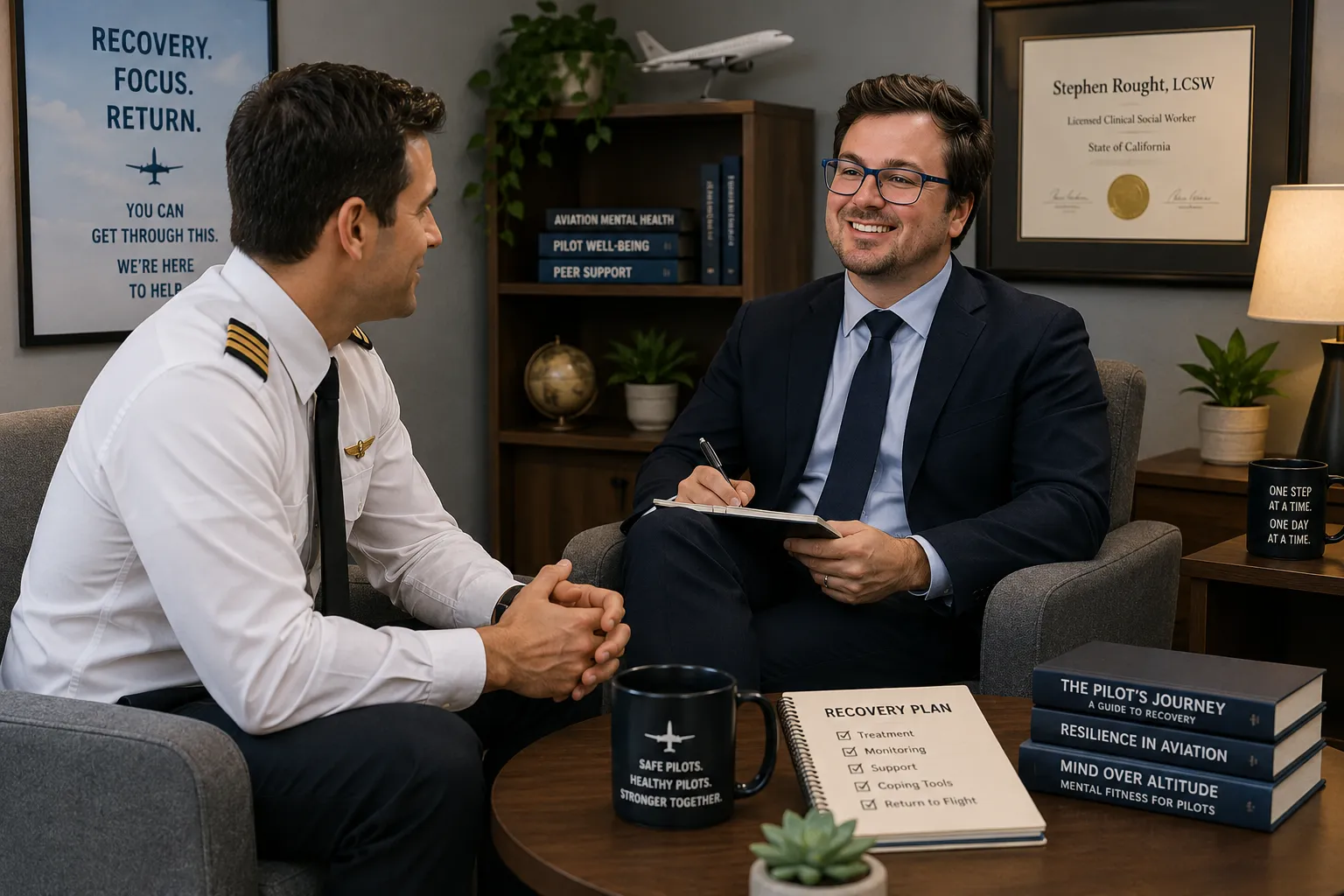
Recovery under FAA monitoring demands patience above all else. The monitoring structure is designed to support rehabilitation rather than to punish, and because of that purpose, its goals center on a safe return to the cockpit and the pilot's overall well-being. That framing matters. Pilots who view the process as a path back to flying, rather than a career-ending event, tend to fare better emotionally throughout monitoring.
Emotional health is not separate from the clinical requirements — it is built into them. Psychiatric and psychological assessments run alongside peer monitoring, meaning feelings of anxiety, depression, or FAA monitoring stress are expected parts of the journey, not signs of failure.
Is It Normal to Feel Anxious During HIMS Monitoring?
Yes. Testing, evaluations, and career uncertainty create real pressure. Pilots benefit from pilot anxiety support that addresses these fears directly rather than minimizing them.
Does the HIMS Program Actually Work?
The program has changed many pilots' careers for the better, offering a documented, structured route back to flying after treatment. Countless aviators have completed monitoring and returned to the flight deck.
Three points worth holding onto:
Rehabilitation, not punishment, drives the entire structure.
Emotional support is built into monitoring, not an afterthought.
Understanding internal stress early prevents it from damaging relationships, health, or job performance later.
Recovery unfolds gradually. Staying engaged with support systems throughout keeps that trajectory moving forward.
Managing emotional stress during FAA HIMS monitoring and recovery demands intentional self-care, professional support, and compassion toward yourself throughout the process. By addressing anxiety and uncertainty with evidence-based therapeutic tools, maintaining open communication with your treatment team, and building sustainable coping strategies, you create a foundation for both recovery and renewed confidence in your aviation career. Your commitment to this journey reflects your dedication to safety and professional integrity.
FAQ
What makes FAA HIMS monitoring so emotionally stressful?
Unannounced abstinence testing creates persistent uncertainty that removes the sense of control pilots rely on from their training. This unpredictability keeps FAA monitoring stress active even during stable periods of recovery.
How does unannounced testing affect pilot anxiety?
Random calls and tight testing windows raise FAA monitoring stress for pilots, even those in stable recovery. The lack of a fixed schedule clashes with pilots' checklist-driven training instincts, intensifying daily tension.
Who provides therapy for pilots managing HIMS-related stress?
Stephen Rought, LCSW, located in Chino Hills, CA, offers discreet, career-safe therapy addressing anxiety and burnout during HIMS recovery. His approach protects certification status and confidentiality throughout the monitoring process.
