The Complete Guide to the FAA HIMS Program for Pilots
The Complete Guide to the FAA HIMS Program for Pilots
By Stephen Rought, LCSW Editorial Team · Updated 2026-07-24
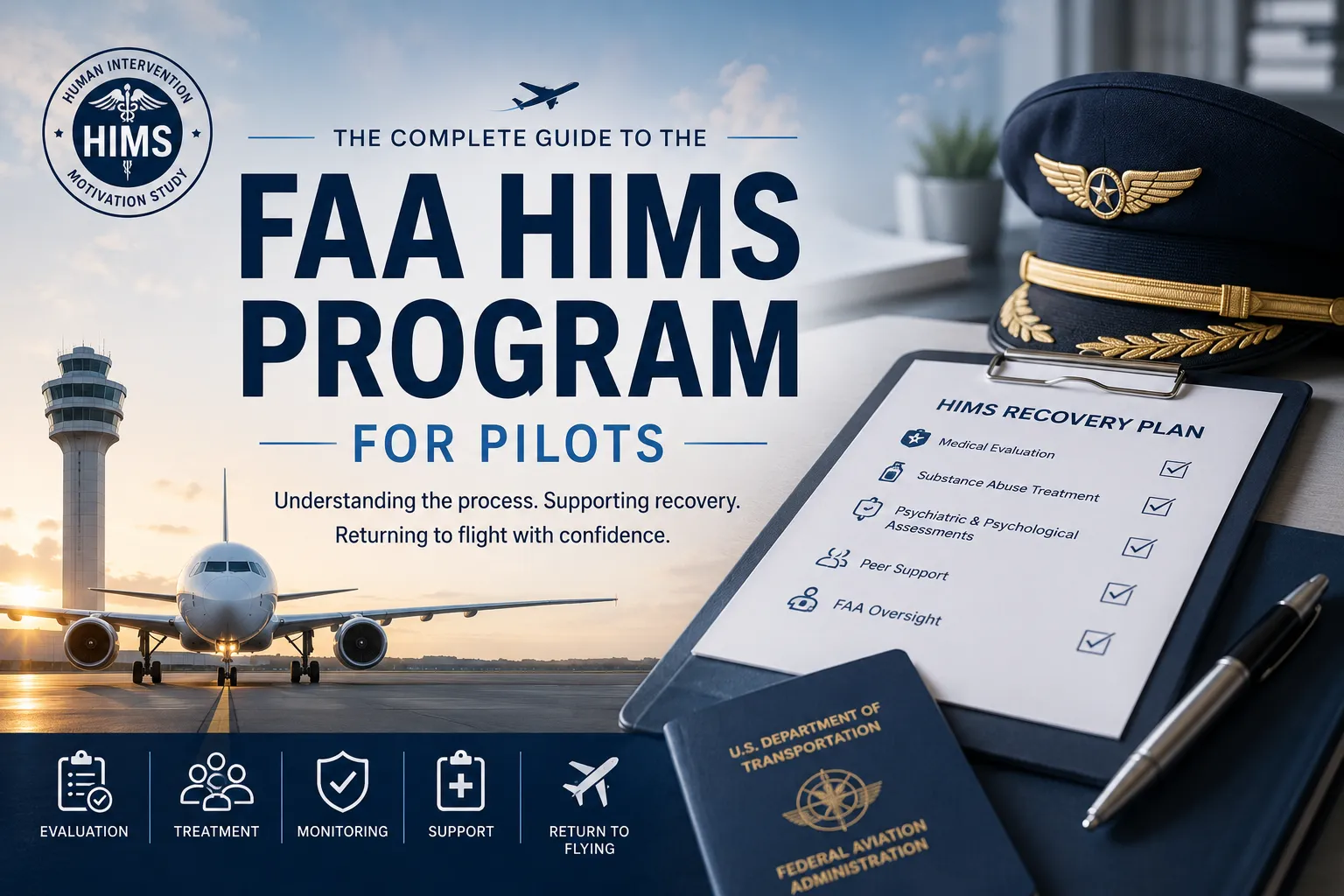
The FAA Human Intervention Motivation Study (HIMS) Program is a federally approved pathway that helps pilots recover from substance use or certain mental health conditions while working toward FAA medical certification. This guide explains how the HIMS process works, what evaluations and monitoring are required, and how therapy supports pilots throughout recovery and their return to flying.
Stephen Rought, LCSW, provides confidential, evidence-based telehealth therapy for pilots in California and Florida, collaborating with HIMS AMEs, sponsors, and other professionals to support long-term recovery while protecting career-sensitive privacy
Who Needs the FAA HIMS Program?
The FAA HIMS Program serves pilots whose medical certification has been affected by substance use disorders or certain mental health conditions requiring additional review. Rather than permanently grounding aviators, the program creates a structured pathway toward recovery and, when appropriate, a safe return to flying under FAA oversight.
Commercial airline pilots, corporate pilots, charter pilots, and private pilots may all participate in HIMS when recommended by the FAA or their Aviation Medical Examiner (AME). While each case differs, every participant follows an individualized recovery plan designed around medical evidence, ongoing monitoring, and demonstrated fitness for duty.
Participation often begins after a pilot voluntarily seeks help or after concerns arise during a medical examination, workplace event, or self-disclosure. The goal is not punishment—it is rehabilitation while maintaining the highest standards of aviation safety.
Who Makes Up the HIMS Team?
Recovery through HIMS is built on collaboration. No single provider manages the entire process. Instead, a multidisciplinary team works together to monitor progress and ensure pilots meet FAA medical standards.
The HIMS team commonly includes:
- A HIMS Aviation Medical Examiner (AME) who oversees medical certification and communicates with the FAA.
- A HIMS psychiatrist or psychologist who performs required evaluations and provides recommendations regarding mental health and recovery.
- A licensed therapist, such as Stephen Rought, LCSW, who provides ongoing counseling, emotional support, and coping strategies throughout recovery.
- A peer sponsor, often another pilot who has successfully completed the HIMS process and understands the unique pressures of the profession.
- Substance abuse treatment providers, when treatment is part of the pilot's recovery plan.
Each professional contributes a different perspective, creating a comprehensive support system that promotes both long-term recovery and public safety.
How Long Does the HIMS Process Take?
The timeline varies from one pilot to another because every recovery journey is unique. Some pilots complete required monitoring sooner, while others remain in the program for several years depending on medical findings, treatment progress, and FAA requirements.
Several factors influence the timeline, including:
- The nature and severity of the original concern
- Compliance with treatment recommendations
- Results of psychiatric and psychological evaluations
- Consistency during ongoing monitoring
- FAA review and documentation requirements
The HIMS Program emphasizes sustained recovery rather than quick completion. Demonstrating stability over time gives the FAA confidence that a pilot can safely resume flight duties.
What Does the HIMS Process Actually Require?
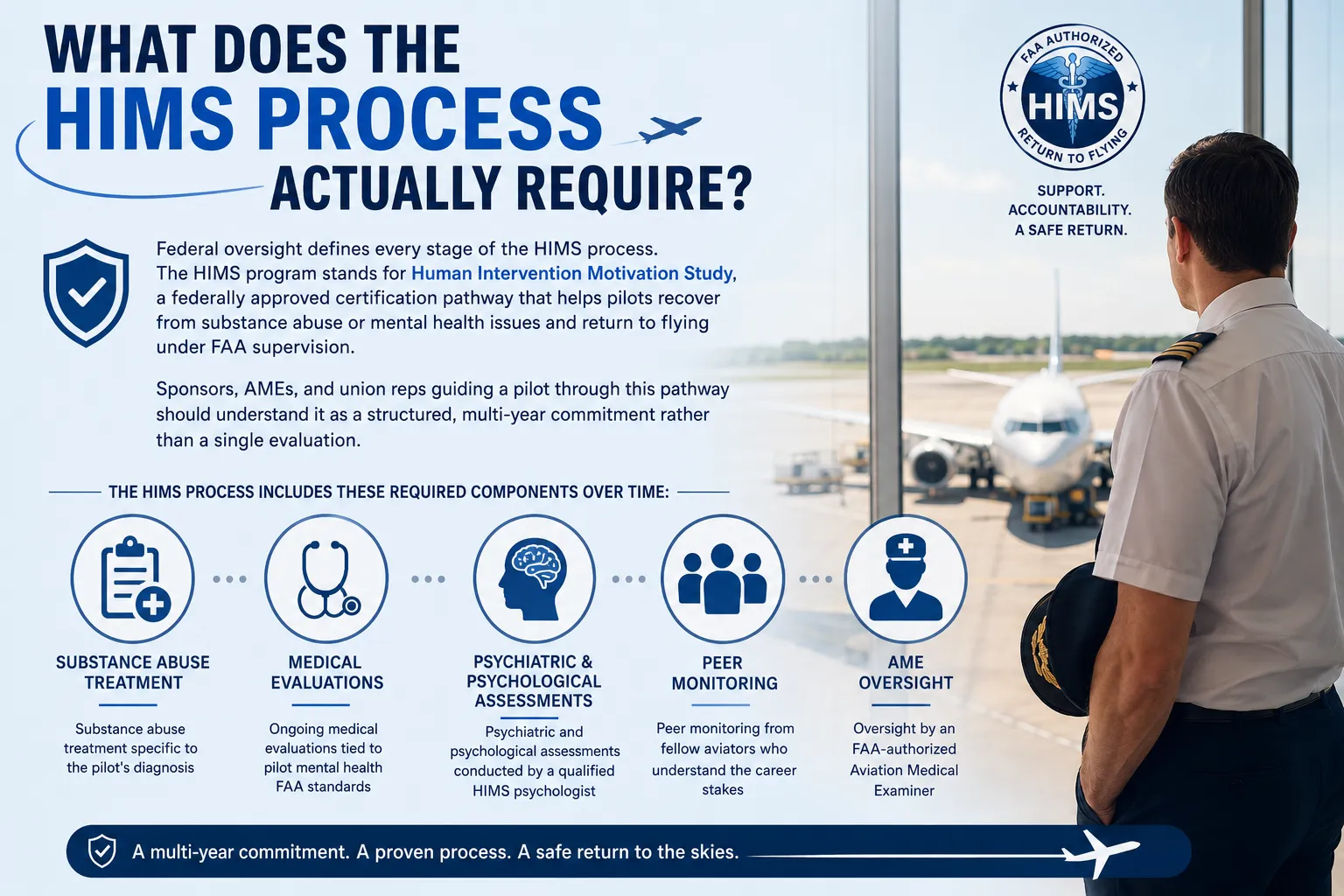
Federal oversight defines every stage of the HIMS process. The HIMS program stands for Human Intervention Motivation Study, a federally approved certification pathway that helps pilots recover from substance abuse or mental health issues and return to flying under FAA supervision. Sponsors, AMEs, and union reps guiding a pilot through this pathway should understand it as a structured, multi-year commitment rather than a single evaluation.
The program blends several required components over time, including substance abuse treatment aligned with FAA standards:
- Substance abuse treatment specific to the pilot's diagnosis
- Ongoing medical evaluations tied to pilot mental health FAA standards
- Psychiatric and psychological assessments conducted by a qualified HIMS psychologist
- Peer monitoring from fellow aviators who understand the career stakes
- Oversight by an FAA-authorized Aviation Medical Examiner
What Does the HIMS Process Cost?
The total cost of participating in the FAA HIMS Program varies considerably because every pilot's recovery plan is individualized. Expenses depend on the evaluations, treatment recommendations, monitoring requirements, and length of participation required by the FAA.
Costs may include:
- HIMS Aviation Medical Examiner appointments
- Psychiatric evaluations
- Psychological testing
- Individual therapy sessions
- Substance abuse treatment programs
- Random drug or alcohol testing
- Follow-up medical evaluations
While the financial commitment can be significant, many pilots view participation as an investment in preserving both their careers and long-term health.
Is HIMS a punishment for pilots?
No. The program exists for rehabilitation, not discipline. Its explicit goal is safe reintegration into the aviation workforce once a pilot meets FAA health standards, keeping the focus on recovery, return to cockpit after treatment, and long-term fitness to fly.
Why does therapy matter within HIMS?
Flying demands constant focus, precision, and emotional stability, and those demands don't pause during recovery. Therapy for pilots working through this process addresses the psychological weight of scrutiny while supporting genuine, sustainable pilot substance abuse recovery.
Common Challenges Pilots Face During HIMS
Entering the HIMS Program often brings emotional and professional challenges that extend beyond medical treatment alone. Many pilots experience uncertainty about their careers while balancing recovery with family responsibilities, financial pressures, and the expectations of employers and regulators.
Common concerns include:
- Fear of losing a flying career
- Anxiety surrounding psychiatric evaluations
- Stress during extended monitoring
- Concerns about confidentiality
- Managing recovery while maintaining professional responsibilities
- Navigating FAA paperwork and documentation
Working with a therapist familiar with aviation can help pilots develop practical coping strategies while maintaining perspective throughout the process.
Returning to Flying After HIMS
Returning to the cockpit represents the culmination of consistent recovery, documented progress, and ongoing commitment to aviation safety. Before medical certification can be restored, pilots must satisfy FAA requirements demonstrating that they can safely perform flight duties without compromising public safety.
Depending on the individual case, returning to flying may involve:
- Completion of required treatment programs
- Favorable psychiatric and psychological evaluations
- Continued abstinence monitoring when required
- Positive reports from treatment providers and peer sponsors
- Approval from the HIMS Aviation Medical Examiner
- FAA review of all supporting medical documentation
For many pilots, returning to flight is not simply about regaining a certificate—it represents rebuilding confidence, restoring professional identity, and demonstrating resilience through sustained recovery.
How Does Therapy Fit Into Psychiatric Evaluations?
Certified mental health professionals conduct the HIMS psychiatric evaluation as a comprehensive assessment, not a pass-fail test. Pilots dealing with substance dependence, or other factors affecting their medical certification, typically encounter this evaluation as a required step. The goal centers on measuring cognitive, emotional, and psychological health to confirm safe, effective performance in the cockpit.
Preparation matters as much as the evaluation itself. Working with an aviation therapist ahead of time reduces stress and builds confidence going into the assessment. A therapist familiar with aviation-specific pressures can help a pilot organize thoughts, anticipate questions, and present an accurate picture of ongoing recovery efforts.
Why does anxiety get overlooked in aviation evaluations?
Anxiety remains a common but often stigmatized experience among pilots. The culture rewards stoicism, so pilots frequently downplay symptoms rather than risk appearing unfit. A skilled HIMS psychologist recognizes this pattern and creates space for honest disclosure without judgment.
Does therapy protect confidentiality during evaluation?
Diagnosis-free support options, like those offered through Stephen Rought, LCSW in Chino Hills, CA, allow pilots to address stress and performance pressure discreetly. This approach matters most for pilots worried about how disclosure affects their standing.
Therapy, in short, functions as preparation and support rather than an obstacle:
- Clarifies what evaluators assess
- Builds coping strategies before the appointment
- Offers a confidential space to process fear or shame
- Strengthens documentation of genuine recovery progress
What Support Helps Pilots Return and Stay Certified?

Sustained recovery depends on structured monitoring paired with consistent mental health care. Random abstinence testing, required throughout HIMS continuing care, checks recovery quality and protects the standing of a pilot's FAA special issuance medical certificate. Skipping this layer of oversight puts both flight safety and career reinstatement at risk.
Chemical dependency behaves like other chronic illnesses. It follows a primary, progressive course and carries a real risk of relapse, much like diabetes or heart disease. That reality is why ongoing support, not a one-time fix, anchors the HIMS process.
Does online therapy work for pilots with demanding schedules?
Telehealth sessions fit around irregular flight rotations without forcing pilots to choose between treatment and their careers. Research from randomized controlled trials and systematic reviews backs the effectiveness of telehealth for reducing stress.
Strong support structures for pilot substance abuse recovery typically include:
- A qualified HIMS psychologist for ongoing evaluation
- Regular sessions with an aviation therapist
- Confidential, flexible therapy for pilots balancing rotation demands
- Wellness programming supporting mental, physical, and emotional health long-term
Navigating the HIMS process demands both clinical expertise and genuine understanding of aviation's unique pressures. Therapy during this journey provides pilots with evidence-based tools to address underlying concerns, rebuild confidence, and demonstrate meaningful progress to regulators. By working with a clinician experienced in aviation-specific challenges, pilots gain the support necessary to move forward with clarity and resilience, ultimately reclaiming both their career and their peace of mind.
Mistakes That Can Delay Medical Certification
Successful completion of the HIMS Program depends on consistency, honesty, and adherence to FAA requirements. Delays often occur not because recovery is unsuccessful, but because required documentation or monitoring is incomplete.
Common mistakes include:
- Missing scheduled appointments
- Failing to complete recommended treatment
- Incomplete or inconsistent medical documentation
- Poor communication among providers
- Missing required monitoring or testing
- Delaying follow-up evaluations
- Underestimating the importance of ongoing therapy and support
Maintaining open communication with the HIMS team and carefully following recommendations helps minimize unnecessary delays while supporting a smoother return-to-flying process.
FAQ
Is HIMS a form of punishment for pilots?
No, the program exists for rehabilitation, not discipline. It focuses on safe reintegration into the aviation workforce once a pilot meets FAA health standards.
How does therapy help pilots prepare for the HIMS psychiatric evaluation?
Working with an aviation therapist beforehand reduces stress and builds confidence. A therapist familiar with aviation-specific pressures helps organize thoughts, anticipate questions, and present an accurate picture of recovery efforts.
What kind of support does Stephen Rought, LCSW provide for HIMS pilots?
Stephen Rought, LCSW, based in Chino Hills, CA, offers confidential, evidence-based telehealth therapy for California and Florida pilots, working alongside HIMS AMEs and sponsors while protecting career-sensitive privacy.
