
Therapy Blog and Mental Health Resources
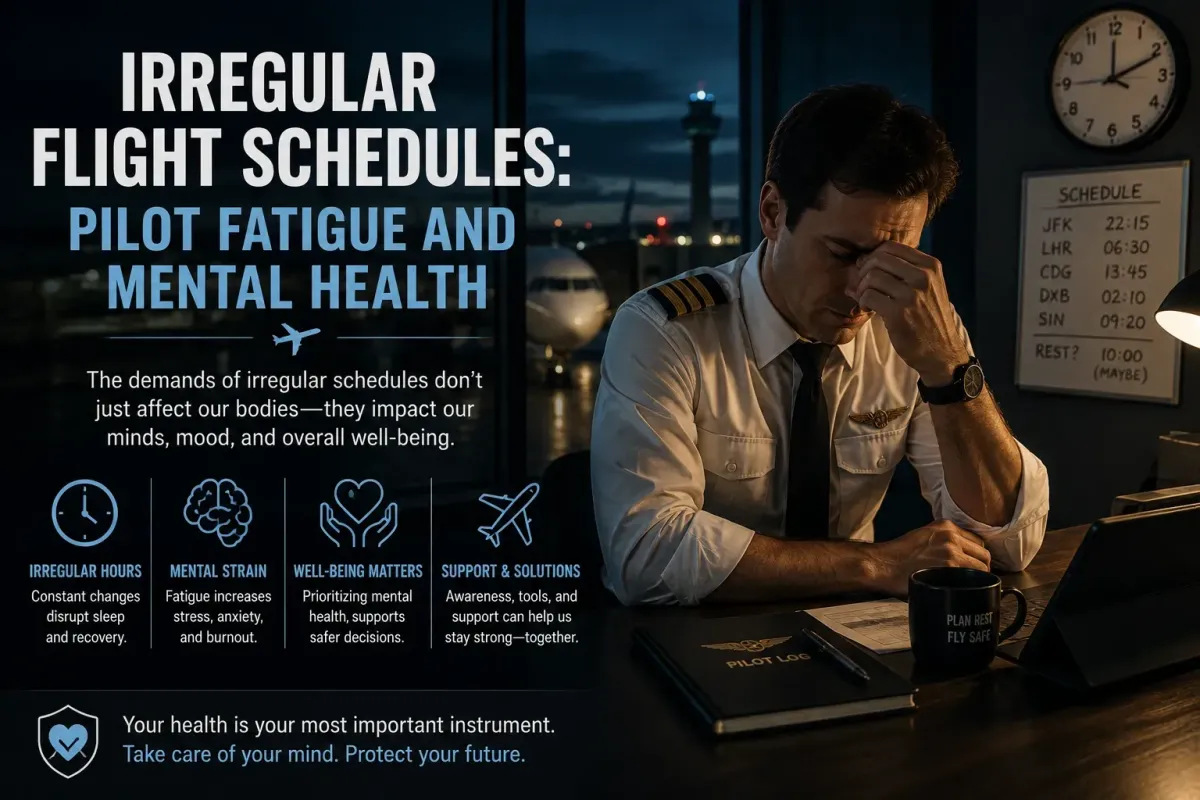
Irregular Flight Schedules: Pilot Fatigue and Mental Health
Irregular Flight Schedules: Pilot Fatigue and Mental Health
By Stephen Rought, LCSW Editorial Team · Updated 2026-08-03
Irregular flight schedules disrupt circadian rhythms, causing chronic fatigue, sleep deprivation, and emotional instability among pilots. Frequent time zone changes and unpredictable duty hours heighten isolation and stress, contributing to anxiety and depressive symptoms. Stephen Rought, LCSW offers diagnosis-free, confidential telehealth support in California and Florida, helping pilots manage schedule-related stress without jeopardizing certification or career standing. Learn more about the practice at Stephenrought.Com.
Key Takeaways
Irregular flight schedules disrupt circadian rhythms, causing sleep deprivation that impairs pilot cognitive function and decision-making abilities.
Many aviation professionals experience mental health challenges, including depression and anxiety disorders.
Unpredictable duty times increase chronic stress levels, directly contributing to anxiety disorders and depressive episodes among airline pilots.
Flight schedule irregularity isolates pilots from stable social support systems, exacerbating loneliness and reducing access to consistent mental health care.
Why Do Irregular Schedules Strain Pilot Wellness?
Rotating duty periods and constant time zone shifts disrupt sleep cycles, appetite, and mood regulation in ways that accumulate over a career. Rest is often insufficient before the next assignment begins. Layovers, red-eyes, and international routes stack on top of one another, leaving little room for recovery between flights. Flight duty itself carries a distinct profile: long hours, high-stakes decisions, and extended stretches away from home combine to create conditions where pilot fatigue and mental health concerns take root and grow harder to manage without structured support.
What Makes Pilot Schedules Different From Other High-Stress Jobs?
Most demanding careers offer some rhythm — a predictable week, a home each night. Pilots rarely get that. Crossing multiple time zones within days scrambles circadian rhythms faster than the body can adapt, compounding stress that already comes with responsibility for hundreds of lives per flight.
Can Wellness Programs Offset Schedule-Driven Stress?
Yes. Comprehensive wellness initiatives exist specifically to help aviators protect mental, physical, and emotional health across an entire career, not just during a rough month. Effective aviation stress counseling works best when paired with:
Sleep and fatigue management strategies tailored to rotating shifts
Confidential check-ins that don't threaten certification status
Peer support networks familiar with irregular duty demands
Sustained wellness depends on addressing schedule strain directly, not around it.
What Mental Health Risks Do Disrupted Schedules Create?
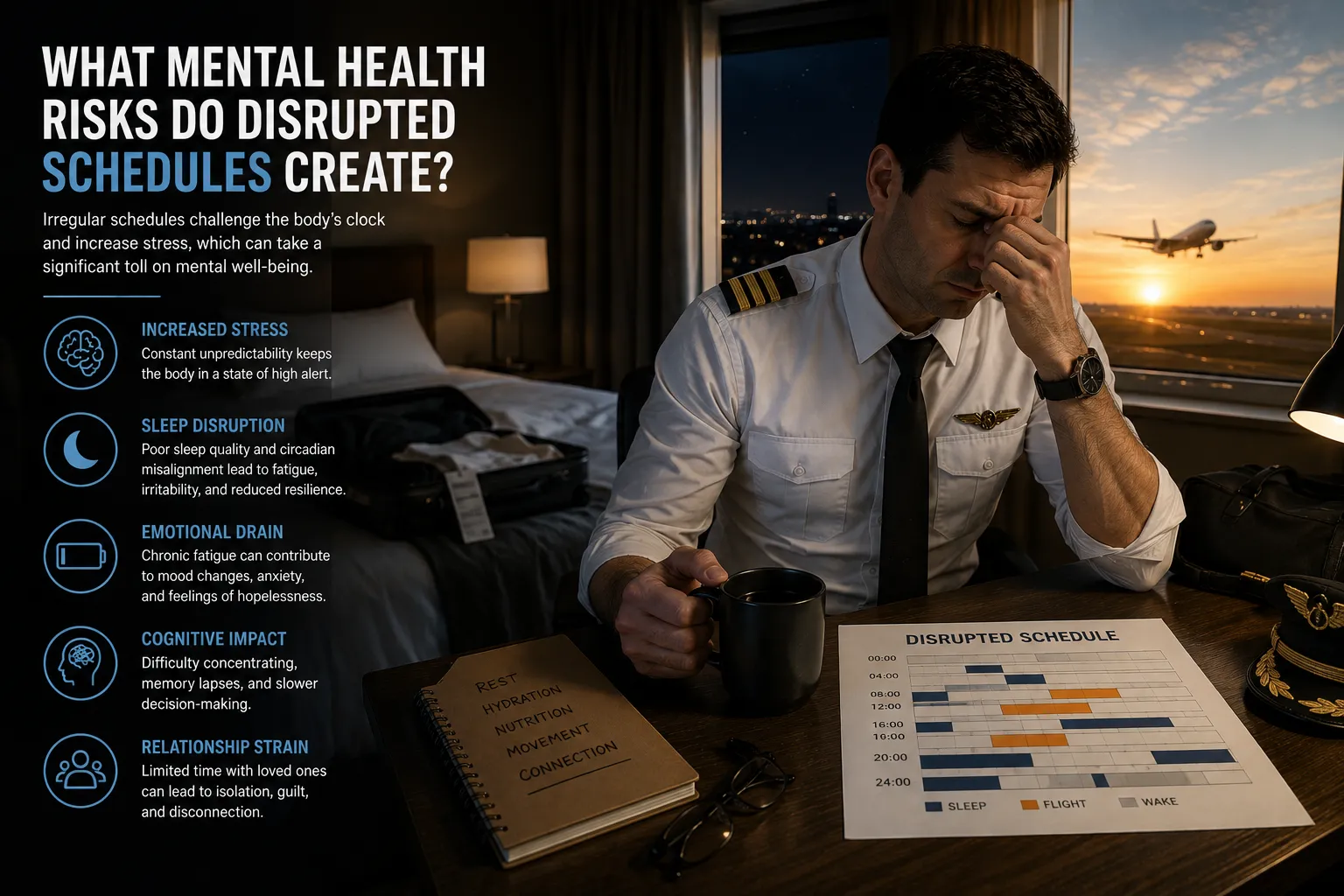
Disrupted schedules produce measurable cognitive and emotional strain among pilots. Research from the National Library of Medicine found that 12.6% of pilots reported symptoms of mild depressive disorders that impaired executive function. The mental process governing decision-making, judgment, and reaction time. For a workforce trusted with hundreds of lives per flight, that figure signals a real safety concern, not just a personal one.
Pilot fatigue and mental health are closely linked, and irregular duty periods, overnight layovers, and constant time zone shifts compound the risk. Industry sources describe the resulting psychological burden as a hidden crisis, one affecting professionals whose vigilance the public depends on every day. The strain rarely announces itself; it builds quietly across rosters and rotations.
Is Fatigue-Related Stress Limited to Pilots Alone?
No. Ground handlers, dispatchers, and flight attendants report similar stress from demanding, irregular schedules. The pressure runs throughout aviation operations, though pilots carry an added layer of responsibility tied to final decision-making authority.
Why Do So Many Pilots Avoid Seeking Help?
Fear of self-reporting keeps many pilots silent. Stigma around mental health, combined with limited knowledge of available resources, discourages aviators from raising concerns early. This silence allows treatable issues to develop into larger risks. One reason confidential aviation stress counseling matters for flight crew schedulers and wellness program managers alike.
How Can Pilots Get Confidential, Schedule-Friendly Support?
Online therapy solves the scheduling conflict that keeps many pilots from seeking help. Rigid duty rosters, overnight layovers, and constant time-zone shifts make weekly in-office appointments nearly impossible for most flight crews. Aviation stress counseling delivered through secure digital platforms removes that barrier entirely, offering an accessible and flexible format built around demanding, unpredictable schedules.
Privacy remains the second major concern for aviators considering therapy. Digital counseling platforms allow pilots to connect with a licensed clinician without disrupting flight assignments or exposing sensitive health information to employers. Sessions happen discreetly, on a pilot's own time, wherever a stable connection exists.
Is Telehealth Actually Effective for Pilots?
Clinical research answers yes. Randomized controlled trials and systematic reviews consistently show telehealth reduces stress symptoms. Improves overall well-being among high-risk occupational groups, pilots included. The evidence base continues to grow, giving aviation professionals a credible, tested option rather than an unproven substitute for traditional care.
Where Is This Support Available?

Confidential counseling extends across California and Florida, combining two delivery formats. Local pilots can meet in person at the Chino Hills office; those stationed elsewhere connect through secure telehealth available throughout California and Florida. This dual structure means:
Pilots based near Chino Hills get face-to-face sessions when schedules allow
Pilots anywhere in California or Florida access the same clinical support remotely
Pilot fatigue and mental health concerns get addressed without grounding a career or triggering unwanted disclosure
The mental health challenges posed by irregular flight schedules are real and warrant serious attention. Pilots who recognize the toll of circadian disruption, fatigue, and isolation on their well-being take an important step toward sustainable career longevity. Professional support tailored to aviation's unique demands provides practical tools for managing these pressures while maintaining the focus and resilience your role demands. Your mental health directly supports your performance—and seeking guidance reflects professional strength, not weakness.
FAQ
How do irregular flight schedules affect pilot mental health?
Rotating duty periods force the body's internal clock to reset again and again, so fatigue and mood disruption build up over months and years rather than after a single hard trip. Left unaddressed, that cumulative strain shows up as anxiety, depressive symptoms, and a growing sense of isolation from friends and family back home.
What makes pilot schedules riskier than other demanding jobs?
Unlike most high-stress careers, pilots rarely get a predictable rhythm or a home each night. Crossing multiple time zones within days scrambles circadian rhythms faster than the body can adapt, compounding the stress of high-stakes responsibility.
Where can pilots get confidential support for schedule-related stress?
Stephen Rought, LCSW, based in Chino Hills, CA, offers diagnosis-free, confidential telehealth support for pilots in California and Florida. This support helps pilots manage schedule-related stress without jeopardizing certification or career standing.


Stephen Rought, LCSW
Proudly Accepting
Aetna Insurance

Disclaimer
Stephen Rought, LCSW does not guarantee any specific outcome. All content provided on the Stephen Rought, LCSW website is provided for educational or informational purposes only. Consult medical professionals you are working with about whether any opinions or recommendations provided through this website apply to you and your unique circumstances
Currently, all online therapy sessions are conducted using the HIPPA compliant Telehealth service doxy.me
SErvices
Individual Therapy
Parent Coaching
Financial Therapy
Couples Counseling
Family Therapy