
Blog

Discover Key Pilot Mental Health Support Resources Today
Find Practical, Confidential Mental Health Support for Pilots — A Clear, Actionable Guide
Pilots face distinct operational stressors that affect safety, career longevity, and personal well‑being. That means pilot mental wellness calls for focused resources and straightforward strategies that fit life in aviation. This guide lays out pilot mental health supports, confidential therapy options, FAA considerations, and practical stress‑management steps so you can find immediate help and build a longer‑term plan. Many pilots worry that seeking care will jeopardize certification or a career; below we explain confidentiality limits, typical interactions with aeromedical certification, and when to choose private care versus program-based support. You’ll also get prioritized resource lists, simple in‑flight and pre/post‑flight coping steps, and clear directions for FAA‑recognized supports and peer networks. The sections that follow cover top resources, evidence‑based stress management, FAA roles and access steps, confidentiality basics, specialized organizations and peer support, and durable wellness routines for aviation careers.
Which Pilot Mental Health Resources Work Best?
Pilot mental health supports fall into a few practical categories addressing crisis care, ongoing therapy, peer support, and regulatory navigation. Each serves a different purpose: private therapy offers clinical assessment and treatment, peer support programs (PSPs) give peer‑led debriefs and short‑term help, crisis hotlines handle immediate safety needs, and FAA/AME pathways guide certification and return‑to‑fly planning. The right choice depends on urgency, privacy needs, and whether flight safety is affected. Use the short list below to triage quickly — subsequent sections explain confidential therapy routes and aviation wellness programs, plus their privacy trade‑offs.
The main pilot‑focused resource types are:
Private confidential therapy: Clinical assessment and ongoing care under standard confidentiality protections.
Pilot peer support programs (PSPs): Peer‑led debriefs and short‑term emotional support from fellow aviators.
Crisis hotlines and emergency services: Immediate intervention for suicidal thoughts or acute crises.
FAA guidance and AME consultation: Help navigating regulatory questions and planning a safe return to flying with an Aeromedical Examiner.
These options differ in how you access them and how long support typically lasts. The table below compares key attributes to help you decide where to start.
Resource comparison — this table contrasts confidentiality, access path, typical duration, and best uses for each resource type.
Resource TypeConfidentiality LevelAccess MethodTypical DurationBest Use CasePrivate confidential therapyHigh (HIPAA & clinical ethics)Direct referral / telehealthOngoing (weeks–months)Treatment for anxiety, depression, PTSDPilot peer support programs (PSPs)Moderate (peer confidentiality norms)Employer, union, or independent programShort‑term (1–6 sessions)Post‑incident debriefing and peer validationCrisis hotlinesImmediate, may involve emergency routingPhone, text, or chatSingle use / urgent careSuicidality or acute crisis stabilizationFAA / AME consultationsVariable; regulatory exceptions can applyAME appointment or referralDepends on documentation and follow‑upCertification questions and return‑to‑fly planning
Use this comparison to match your needs to the right resource. Next we go deeper into confidential therapy options tailored for pilots.
Which Confidential Therapy Options Fit Pilots Best?
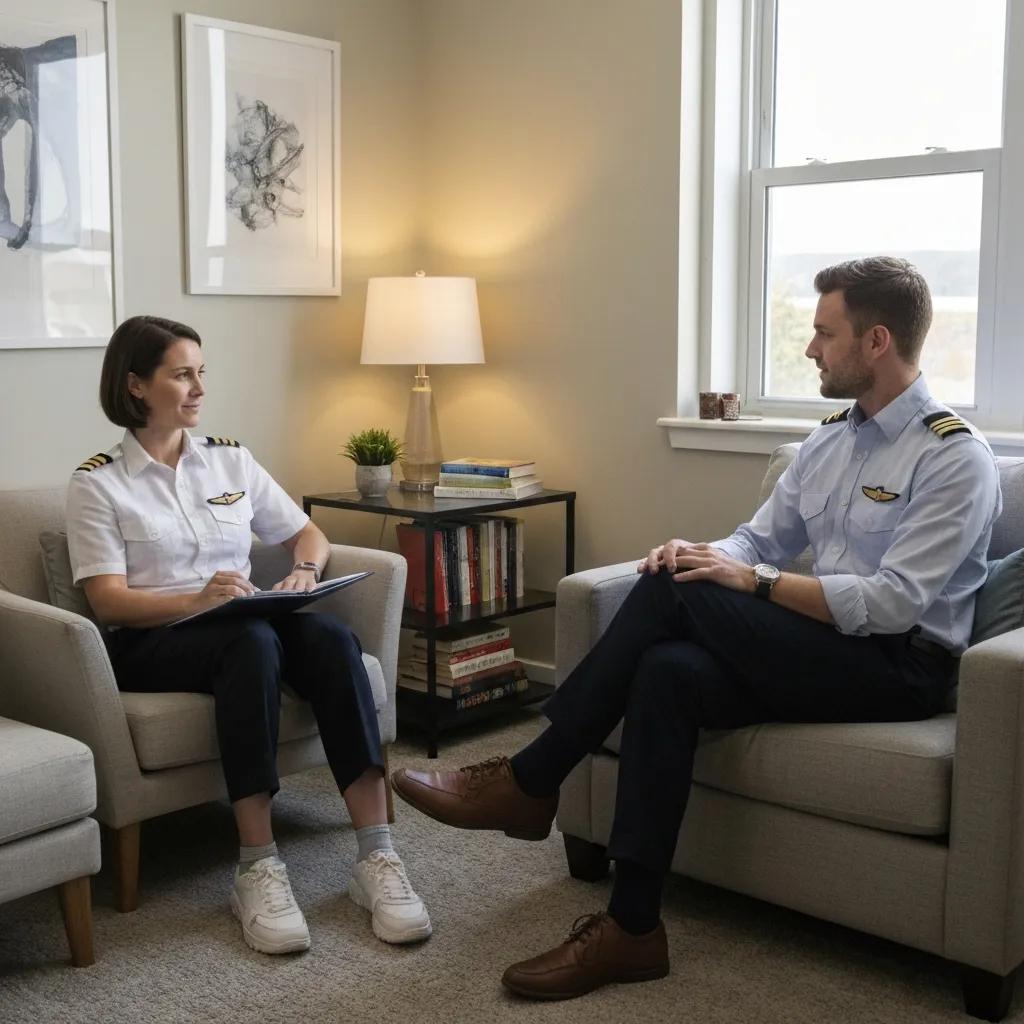
Confidential therapy for pilots usually includes private clinicians experienced in occupational and aviation issues, specialized aviation mental health providers, and secure online therapy platforms that protect privacy while delivering evidence‑based care. Private therapists working under professional ethics and HIPAA‑equivalent rules offer the strongest confidentiality—ask about documentation practices and limits such as duty‑to‑warn. Telehealth and aviation‑savvy counselors add convenience and cultural competence, which helps you disclose concerns more quickly and stabilize performance anxiety or post‑incident distress. Knowing these differences helps you choose care that balances clinical benefit with career‑protecting privacy practices.
When choosing a therapist, ask about experience with aviation culture, record retention, and how medical information is handled if an AME requests it. For practical guidance on starting therapy, see our Getting Started guide. That prepares you for the later decision between peer programs and clinical care.
How Do Aviation Mental Wellness Programs Support Pilots?
Aviation mental wellness programs — including airline wellness services, union programs, and independent PSPs — provide peer support, short‑term counseling, critical incident stress debriefs, and referrals to confidential clinicians. These programs prioritize rapid access after an event, normalize help‑seeking, and deliver support shaped by flight operations and crew dynamics. Confidentiality varies: many PSPs follow strong peer‑confidentiality norms, but reporting obligations may differ from private clinicians. Knowing a program’s scope helps you decide when to use a PSP for initial support and when to move to longer‑term confidential therapy.
Because policies differ, ask coordinators about data handling and referral steps before participating. That leads naturally into practical stress‑management techniques that pair well with program supports.
How Can Pilots Manage Stress and Anxiety Effectively?
Effective stress management for pilots uses layered strategies: immediate in‑flight coping tools, regular practice of cognitive and behavioral skills, and scheduled professional care when symptoms persist. Short‑term tactics center on grounding, controlled breathing, and checklist focus to preserve situational awareness. Longer‑term work uses CBT skills, sleep and circadian hygiene, and mindfulness to build resilience. This combined approach keeps operations safe while supporting recovery, giving you quick actions and durable coping skills. The sections below outline proven techniques and brief mindfulness practices suited to irregular schedules.
Quick actions and longer‑term skills work together. After the techniques section you’ll find a concise table linking each technique to its mechanism and practical cockpit or layover use.
Technique comparison — the table below maps method, how it works, and when to use it pre‑flight, in‑flight, or post‑flight.
TechniqueMechanismPractical Application for PilotsControlled breathingLowers sympathetic arousalTry 4‑4‑6 breaths before duty or during high workloadCognitive restructuring (CBT)Reframes unhelpful thoughtsRehearse alternative, task‑focused thoughts before checkrides or simsGrounding exercisesRe‑orients attention to the presentUse a 5‑sense grounding when cockpit anxiety spikesBrief mindfulness practicesImproves attentional controlThree‑minute breath awareness before takeoff or during layovers
This map helps you pick the right tool for the moment. The next subsection lists short, step‑by‑step techniques you can use immediately.
What Practical Techniques Reduce Pilot Stress and Anxiety?
Evidence‑based techniques for pilots include controlled breathing, cognitive restructuring (CBT), brief exposure practices, and behavioral activation to counter avoidance. Controlled breathing lowers physiological arousal and can be done quietly in the cockpit with a 4‑4‑6 or box‑breath pattern to steady heart rate and focus. CBT skills help you spot automatic catastrophic thoughts and replace them with actionable, present‑focused statements that support situational awareness. Practice these skills off duty so they become automatic in high‑pressure moments — consistent rehearsal improves performance under stress.
Use the mindfulness exercises in the following subsection to support CBT and breathing strategies during irregular schedules and international travel.
Quick‑action techniques you can use in‑flight or pre‑flight:
Controlled Breathing: Inhale 4, hold 4, exhale 6 to lower arousal and regain steady focus.
Grounding 5‑4‑3‑2‑1: Identify 5 things you see, 4 you feel, 3 you hear, 2 you smell, 1 you taste to bring attention back to now.
Brief Cognitive Script: Swap “I’ll fail” for “I’ll follow procedures and manage this flight.”
Checklist Anchoring: Use checklist readbacks as concentration anchors to move attention off worry.
How Do Mindfulness and Relaxation Help Pilots?
Mindfulness reduces rumination and strengthens present‑moment attention, which supports situational awareness and clear decision‑making under pressure. Short practices — three‑minute breath routines, mini body scans, or a layover gratitude note — work well for crews with limited time and disrupted sleep. Regular mindfulness practice improves focus across long duty days and helps offset cognitive effects of circadian disruption. Adding these short habits to pre‑flight routines or post‑leg recovery builds cumulative resilience and complements clinical care when needed.
These exercises pair well with lifestyle changes and routine checkups discussed later to sustain long‑term mental wellness.
What Role Does the FAA Play in Pilot Mental Health?
The FAA’s role is primarily regulatory: aeromedical certification, guidance for clinicians and AMEs, and programs that support safe return‑to‑fly processes. It isn’t a treatment provider, but its rules shape how pilots access care. Importantly, seeking treatment can be compatible with keeping certification when managed with an AME and a clear treatment plan. The FAA also recognizes certain support pathways that help safe reintegration; knowing these pathways reduces fear and encourages earlier help‑seeking. The next sections summarize FAA mental health requirements and practical steps to navigate certification concerns.
FAA entities — the table below outlines common entities, what they do, and how pilots typically access them.
FAA Entity or RequirementService / RequirementHow Pilots AccessAeromedical Examiner (AME)Certification exams, evaluations, and documentationSchedule an AME consult to disclose symptoms and present a treatment planFAA mental health guidancePolicy interpretation and return‑to‑fly criteriaReview FAA guidance and discuss details with your AME or treating clinicianRecognized programs (e.g., PSP referrals)Referral pathways and structured supportReferrals from AMEs, employers, or unions to recognized PSPs
This overview clarifies administrative routes; the next subsection summarizes common FAA mental health requirements and useful practical tips.
What FAA Mental Health Requirements Should Pilots Know?

The FAA focuses on safety‑relevant conditions — for example, uncontrolled mood disorders, psychosis, or suicidality — and generally requires documentation that symptoms are stabilized and the pilot is functionally fit for duty. Pilots typically disclose mental health history to their AME during certification exams; treating clinicians can coordinate with AMEs to provide concise, objective treatment summaries emphasizing recovery and risk mitigation. Many cases resolve with structured treatment, monitored recovery, and targeted documentation that supports return‑to‑fly decisions. Consulting an AME early and keeping a clear treatment and monitoring plan reduces uncertainty and can help preserve certification while you get care.
Knowing these requirements helps you decide when to consult an AME versus when to seek private care; the next subsection explains practical access steps.
How Do Pilots Access FAA‑Supported Mental Health Programs?
Pilots access FAA‑recognized supports through AME referrals, employer or union wellness services, and aviation peer support programs that coordinate with regulatory guidance. Practical steps include booking an AME appointment to discuss concerns, requesting confidential referral options, and asking clinicians for focused functional assessments for certification purposes. Track treatment progress and stay in communication with your AME about work status and recovery milestones — that proactive documentation helps manage certification implications while you receive care. These steps let pilots get necessary help while reducing career disruption.
To protect privacy and career interests, the next major section explains why confidentiality matters and how it works across services.
Why Is Confidentiality Critical in Therapy for Pilots?
Confidentiality matters because trust in therapy enables honest disclosure and effective treatment — and because medical records can affect aeromedical certification if not handled carefully. Confidential therapy creates a safe space to report symptoms and receive evidence‑based care while clinicians follow legal and ethical rules. Limits exist (for example, duty‑to‑warn or mandatory reporting in some jurisdictions), so understanding confidentiality across private therapy, EAPs, and PSPs helps you choose the pathway that balances clinical benefit with career safeguards. The subsections below explain how confidentiality protects careers and list criteria for selecting private services.
Confidentiality comparison — the table below outlines how different service types protect privacy and typical limits to expect.
Service TypeConfidentiality MechanismTypical LimitsPrivate therapyHIPAA and professional ethics; clinician privilegeDuty‑to‑warn, court orders, legally mandated reportingEAPs (Employee Assistance Programs)Employer‑linked contracts; privacy varies by vendorMay require employer notification in certain circumstancesPSPsPeer confidentiality norms and program policiesPolicies vary; check program rules in advance
This table shows why it’s important to ask direct questions about privacy before starting care. Next we look at protective mechanisms in more detail.
How Does Confidential Therapy Protect Careers and Privacy?
Confidential therapy protects pilots through clinician ethical duties and privacy laws that limit disclosure of treatment details without written release. Clinicians can prepare focused functional summaries for AMEs instead of sharing detailed therapy notes. Discuss documentation practices and release‑of‑information options during intake so you control what’s shared. Understanding these protections makes it easier to seek care without unnecessary fear about career consequences.
Talking through documentation and release options naturally leads to which services best meet pilots’ confidentiality needs.
Which Confidential Support Services Are Best for Pilots?
The most protective services are private clinicians familiar with aviation, specialized aviation mental health providers who understand AME processes, and vetted telehealth platforms with strict privacy standards. When choosing a provider, prioritize FAA familiarity, transparent documentation policies, telehealth access for frequent travelers, and clear explanations of legal confidentiality limits. Ask practical intake questions — how are records stored, who has access, and how would information be shared with an AME — so you can choose care that protects both your health and your career.
Which Organizations Offer Specialized Support for Pilots?
Specialized supports come from aviation‑focused nonprofits, peer support programs, professional associations, and employer or union wellness services that tailor resources for flight crews. These groups offer education, peer debriefs, clinician referral networks, and coordination with AMEs for return‑to‑fly planning. When evaluating organizations, look for clear confidentiality policies, aviation‑specific expertise, and straightforward connection routes such as employer programs or independent PSPs. The subsections below outline common group types and how to connect with peer support networks.
Organization types and typical offerings to help you pick the right entry point:
Peer Support Programs (PSPs): Peer debriefs, immediate emotional support, and referral pathways.
Aviation mental health nonprofits: Education, resource libraries, and clinician directories.
Employer or union wellness services: Integrated supports with varying confidentiality rules.
Professional associations: Training, clinician referral networks, and policy guidance.
What Aviation Mental Wellness Groups Provide Pilot‑Focused Support?
Aviation wellness groups include airline or independent PSPs, nonprofits that publish guidance and host support events, and clinician networks specializing in pilot counseling and aeromedical coordination. Services range from peer contacts and post‑incident debriefs to short‑term counseling and referrals to aviation‑competent clinicians. Suitability varies: airline PSPs often fit active airline crews needing immediate debriefs, while independent nonprofits and clinician networks can be better for GA pilots or military‑to‑civilian transitions seeking discreet clinical care. Check governance, confidentiality norms, and referral quality to choose the best organization for your situation.
Connecting to these groups takes a few tactical steps and a bit of etiquette, summarized in the next subsection.
How Can Pilots Connect with Peer Support Networks?
To join a peer support network, contact your employer or union program coordinator, search aviation mental wellness directories, or request a referral from a professional association. Initial contact usually involves a short intake to match you with a suitable peer. Peer‑support etiquette centers on confidentiality, listening, and clear boundaries; peers offer experiential support, not clinical treatment. Use PSPs for normalization and early coping, and escalate to clinical care if symptoms persist or safety is affected. Clear expectations about what peer support provides make these networks a powerful complement to therapy.
After you’ve connected with networks and secured immediate supports, sustaining mental wellness requires long‑term strategies that fit aviation life — covered in the final section.
How Can Pilots Maintain Long‑Term Mental Wellness?
Long‑term wellness depends on consistent routines that address sleep and circadian health, regular mental health checkups, physical activity, nutrition, and social connection that fit irregular schedules. Sustainable strategies combine preventive care — annual mental health check‑ins and stepping up therapy when stress increases — with operational habits like pre‑flight rituals, layover recovery plans, and firm off‑duty boundaries. Career planning, workload pacing, and strong peer networks reduce chronic stress and burnout risk. The following subsections offer concrete lifestyle adjustments and a recommended checkup cadence you can adopt.
Lifestyle checklist — compact, travel‑friendly actions pilots can use to support resilience:
Prioritize circadian‑aligned sleep: Use timed light exposure and consistent pre‑sleep routines when possible.
Portable exercise routines: Short HIIT or mobility sequences and resistance bands for layovers.
Nutrition and hydration strategies: Plan balanced meals and maintain structured hydration on duty days.
Social connection practices: Schedule regular check‑ins with family and peers to counter isolation.
These habits form the backbone of resilience. The next subsection outlines specific lifestyle changes you can implement immediately.
Which Lifestyle Changes Support Sustainable Pilot Mental Health?
Sleep and circadian strategies — optimizing light exposure, using scheduled naps when appropriate, and stabilizing sleep windows — are essential for pilots crossing time zones. Portable exercise options (bodyweight circuits, resistance bands, short cardio bursts) help preserve fitness and mood while traveling. Nutrition strategies focus on regular protein‑rich meals, planned snacks to avoid energy lows, and disciplined hydration to offset cabin dehydration. Regular peer check‑ins and scheduled family contact help prevent loneliness and provide emotional scaffolding when you’re on the road.
These lifestyle changes work best with routine mental health monitoring, described next.
How Do Regular Mental Health Checkups Help Pilots?
Regular mental health checkups support prevention, early detection, and timely intervention, lowering the risk that symptoms will escalate into safety issues or career‑affecting problems. A practical cadence is an annual preventive visit, extra appointments after major incidents, and more frequent sessions during high‑stress periods or life transitions. Telehealth makes consistent care possible for pilots with irregular routes, and clinicians familiar with aviation can tailor documentation to support AME processes. Routine monitoring keeps you proactive about both health and operational readiness.
If you’re thinking about confidential therapy or need direction on next steps, know that help is available. Our priority is to encourage reaching out for support. Stephen Rought, LCSW acts as an information hub and can help connect you to confidential options and appropriate resources.
If you or a colleague are struggling, consider confidential pathways and early consultation — the goal is to protect safety while addressing health, and to make it easier to ask for help when it’s needed. Contact us today to learn more.
Pilot Mental Health: FAA Regulations, Career Concerns, and Social Media Support
This study finds substantial concern among pilots about FAA mental health rules and related career impacts. Many pilots report reluctance to seek care for fear of professional consequences, and social media often becomes a place to express concerns anonymously and find informal support. The research recommends clearer FAA communication, better education, and responsive support resources that address pilots’ fears while encouraging open, constructive discussion about mental health in aviation.
Unveiling the narrative around pilot mental health and aviation — A content analysis of FAA and mental health‑related social media content, A. Walden, 2025
Frequently Asked Questions
What signs indicate a pilot should seek mental health support?
Consider seeking help if you have persistent anxiety, depression, or stress that interferes with daily life or flying. Other warning signs include trouble concentrating, increased irritability, disrupted sleep, withdrawal from others, or avoidance of flying. Early help can prevent escalation and protect both personal well‑being and flight safety.
How can pilots maintain mental wellness with irregular schedules?
Stick to routines that prioritize sleep, nutrition, and social connection when possible. Use circadian‑friendly strategies like timed light exposure, bring portable workouts, and plan balanced meals and snacks. Regular check‑ins with family and peers can reduce isolation. Small, consistent habits matter more than perfect schedules.
What role do peer support programs play in pilot mental health?
PSPs provide a confidential space to share experiences with fellow pilots, offer emotional support after stressful events, and point you to professional services when needed. They help normalize help‑seeking and reduce stigma, making it easier to get early support before problems grow.
How should pilots talk about mental health with an AME?
Be honest about symptoms and treatment while emphasizing your commitment to safety and recovery. Prepare a concise summary of your history, coping strategies, and supports in place. Ask about confidentiality and documentation so you understand how information may be handled — that clarity can ease concerns about career impact.
What benefits come from adding mindfulness to a pilot’s routine?
Mindfulness improves focus, reduces stress, and builds emotional resilience. Simple techniques like controlled breathing or brief meditations help you stay present and manage anxiety during flights. Regular practice supports clearer decision‑making and sustained attention — both critical in aviation.
What should pilots look for when choosing a mental health professional?
Choose a clinician experienced with aviation issues and familiar with FAA processes. Ask about confidentiality, record‑keeping, and telehealth availability for travel. A provider who understands operational demands and documentation needs will better protect both your care and your career.


Stephen Rought, LCSW
Proudly Accepting
Aetna Insurance

Disclaimer
Stephen Rought, LCSW does not guarantee any specific outcome. All content provided on the Stephen Rought, LCSW website is provided for educational or informational purposes only. Consult medical professionals you are working with about whether any opinions or recommendations provided through this website apply to you and your unique circumstances
Currently, all online therapy sessions are conducted using the HIPPA compliant Telehealth service doxy.me
SErvices
Individual Therapy
Parent Coaching
Financial Therapy
Couples Counseling
Family Therapy